
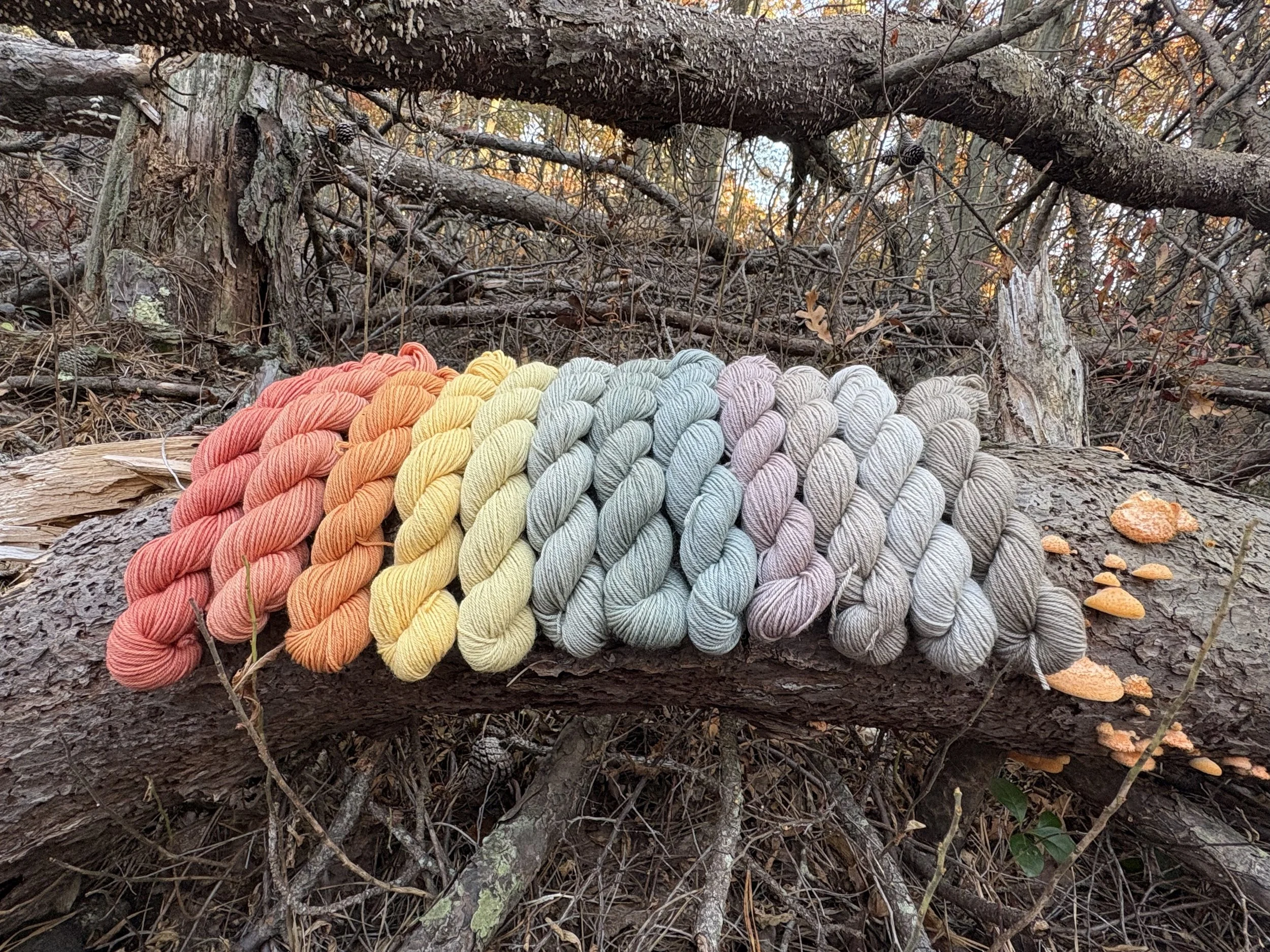
the colors of long island’s mushrooms
a journey from forest floor to fiber
three years in the making
Three years. Three disappointing mushroom seasons. Three autumns spent wandering the forests of Long Island, searching for the extraordinary colors I knew were hiding there.
And then came the summer of 2026.
The rain finally returned.
After several disappointing seasons, Long Island experienced a summer of steady, abundant rainfall—and just in time for mushroom season. For someone who spends so much time searching the forest floor for dye mushrooms, it was the missing piece of the puzzle.
And the mushrooms responded.
With the rain came the colors I’d been waiting years to find.
it began in the woods at usdan
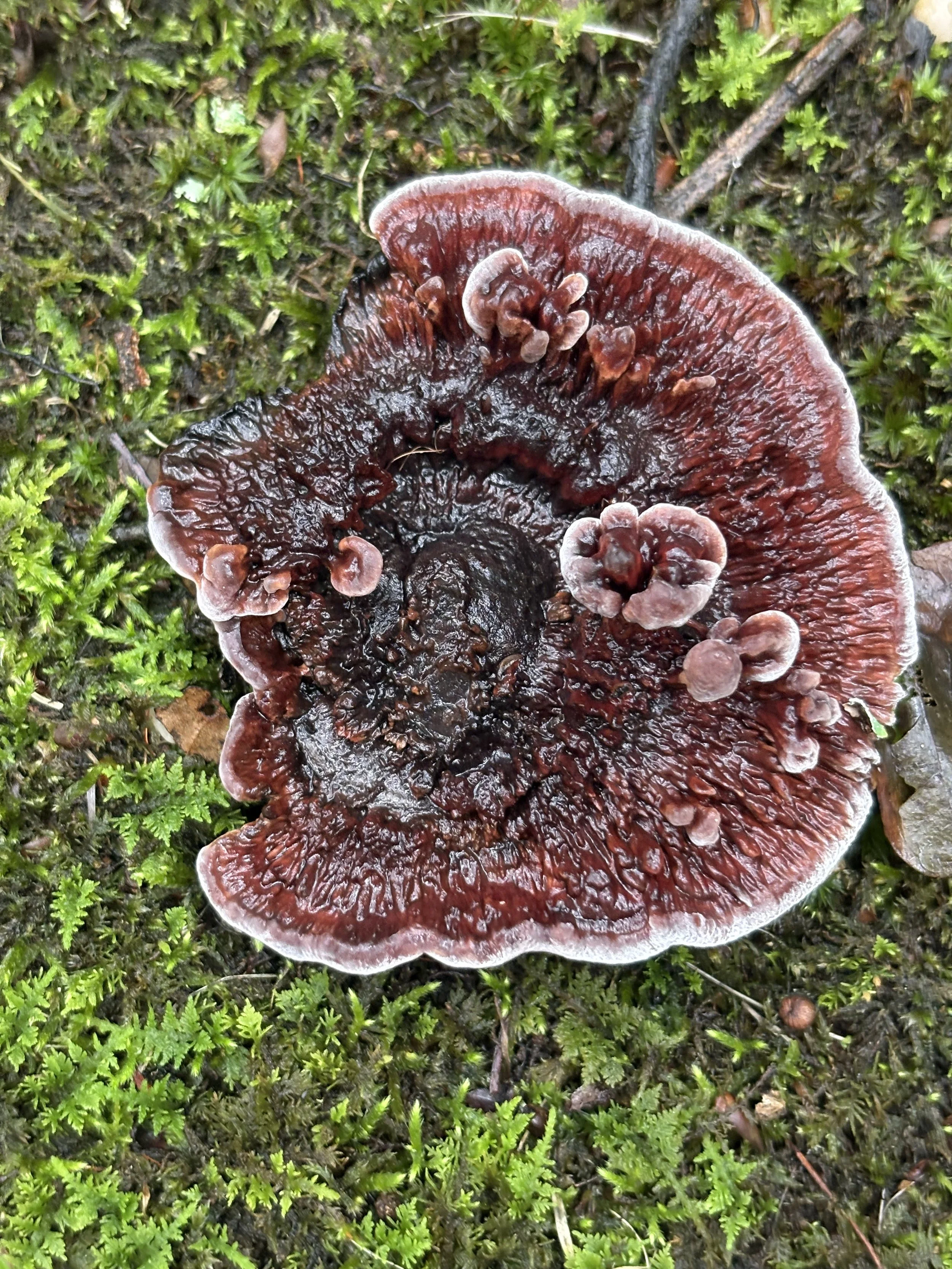
My summers are spent teaching flute at Usdan Summer Camp for the Arts, nestled among the beautiful woodlands of Long Island. During my lunch breaks, I love exploring the wooded campus, wandering off in a different direction each day to see what remarkable fungi might be waiting to be discovered—outside a music hut, near the theatre department, or beside the dance studios.
But in the summer of 2026, those familiar lunchtime walks became something extraordinary.
After years of searching for my favorite dye mushrooms with little success, I was suddenly finding them again.
And not just a few.
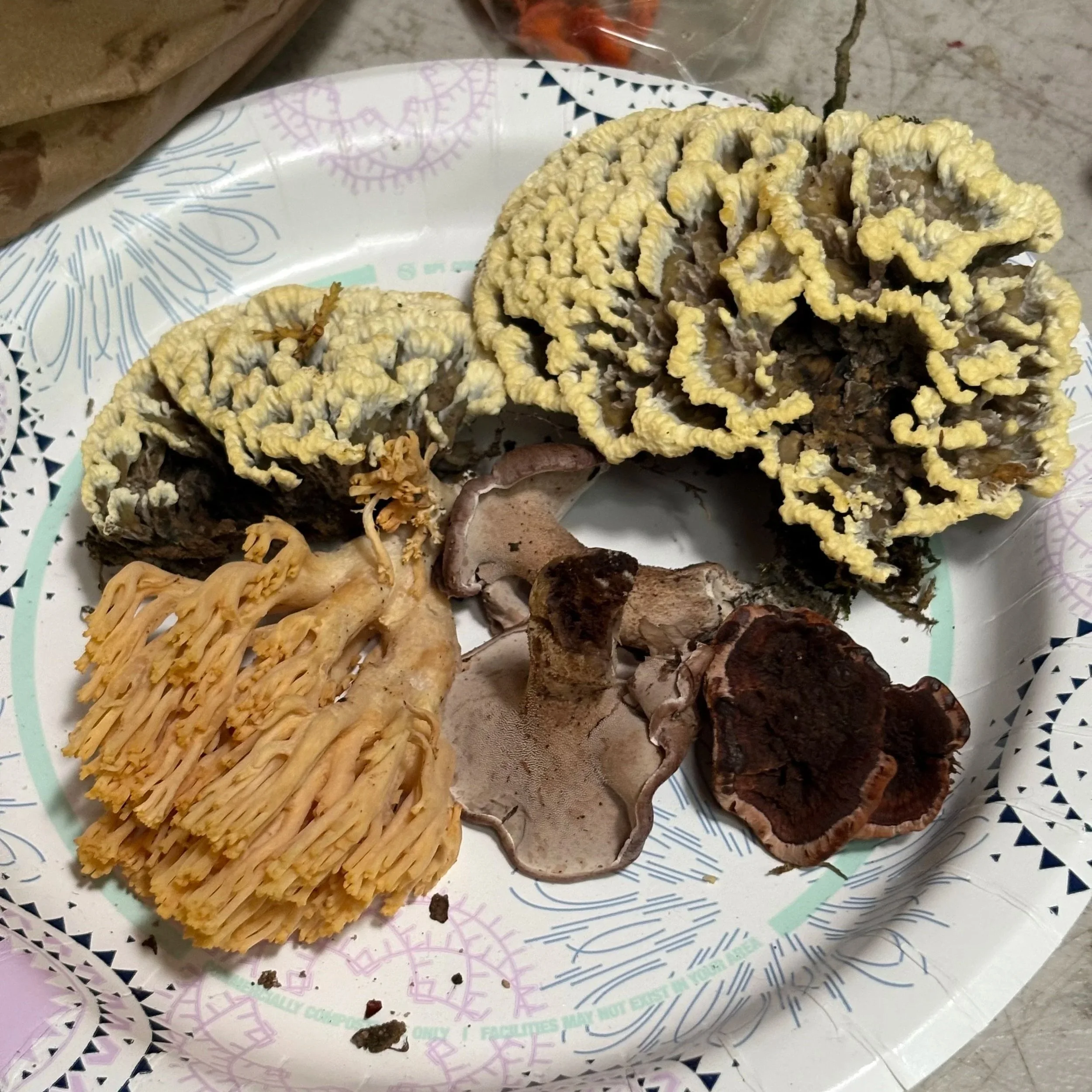
I began finding Hydnellum, whose unassuming fruiting bodies can produce some of the most astonishing blues imaginable. There were Ramaria mushrooms, too, offering possibilities for delicate purples and greys. And I discovered Thelephora vialis, a particularly exciting find that I encountered nowhere else that season.
After years of searching, the forest was finally revealing its hidden colors again.
Following the Colors Through Long Island’s Forests
My mushroom adventures didn’t end at Usdan.
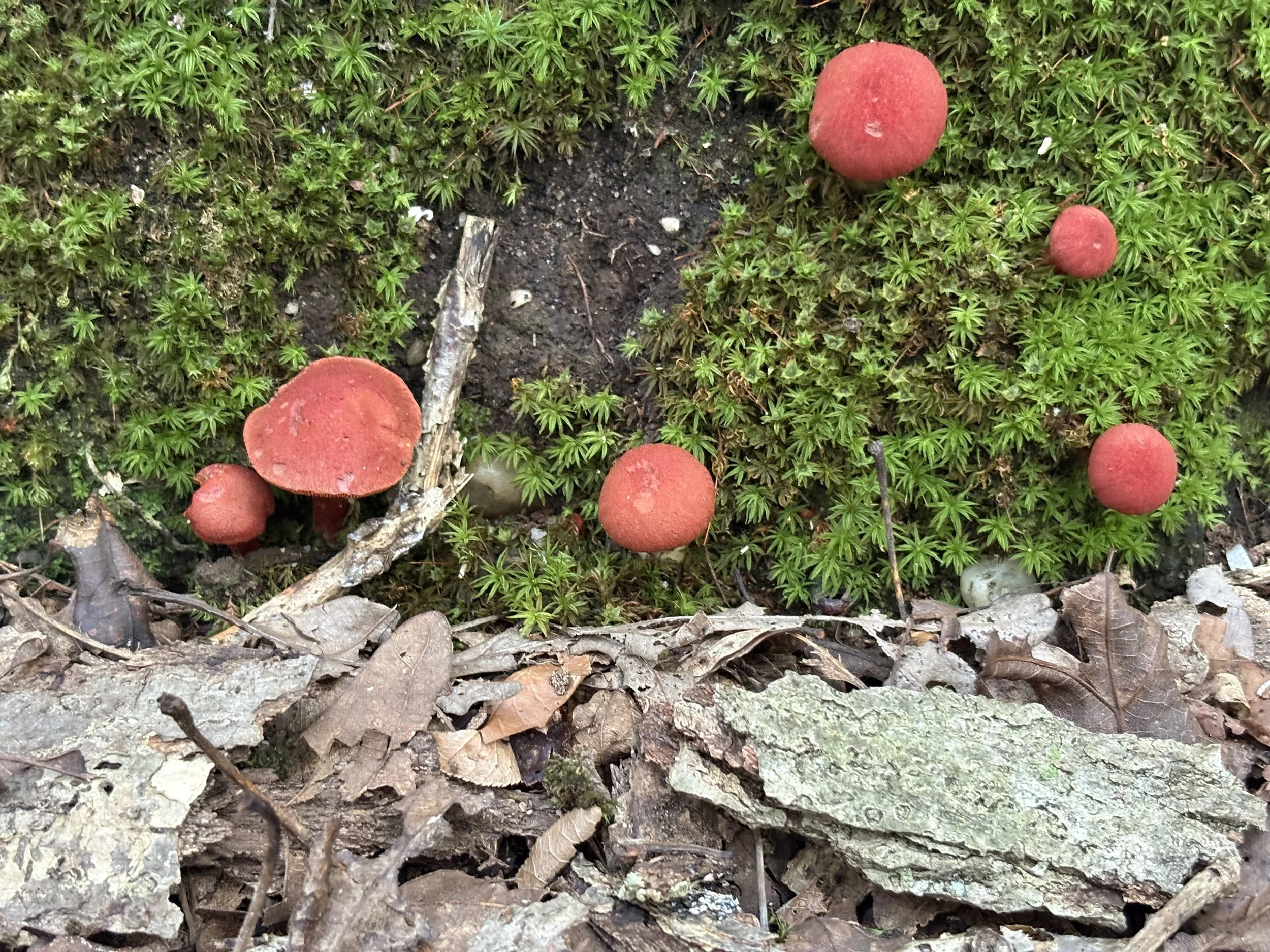
At West Hills, I spent my afternoons wandering familiar trails in search of Cortinarius, sometimes eagerly heading into the woods before my evening flute teaching nearby.
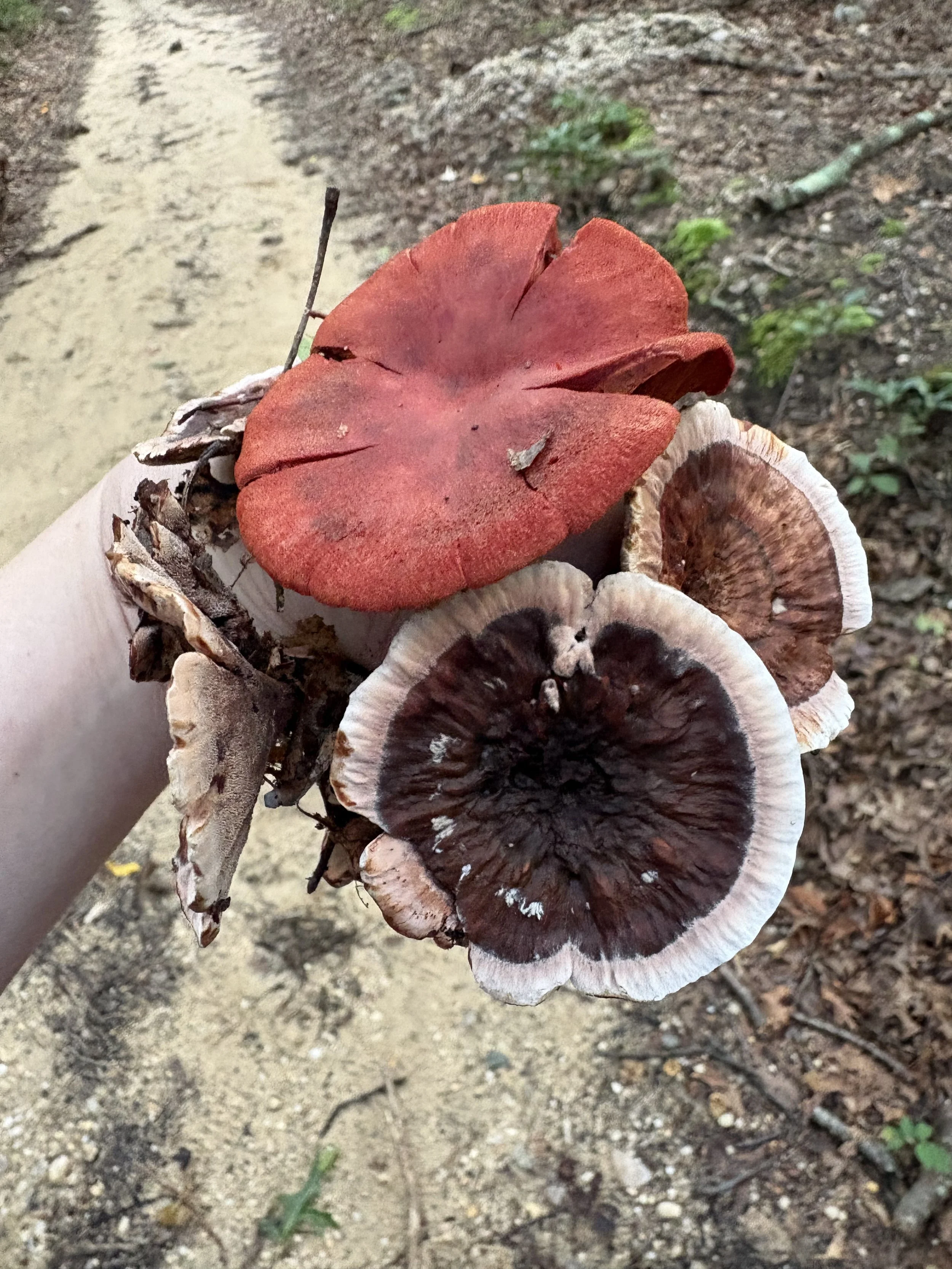
Certain species of Cortinarius are among the most highly sought-after mushrooms for natural dyeing, prized for the extraordinary reds they can produce. With successive dye baths, those rich reds gradually give way to glowing oranges and, finally, golden yellows.
My persistence was rewarded with a extraordinary abundance of these remarkable fungi. I found more Hydnellum there, too, as well as Boletopsis and a number of other dye mushrooms.
And then there’s Sans Souci, a woodland preserve practically in my backyard.
Over the years, its trails have become wonderfully familiar to me. During the 2026 season, they yielded Hydnellum, Ramaria, and Sarcadon, the latter producing spectacular shades of teal. I even began finding Cortinarius there, including one particularly mysterious species I’d been hoping to encounter again for years. Its identity remains unresolved, and I hope to have it genetically sequenced to learn exactly what I’ve found.
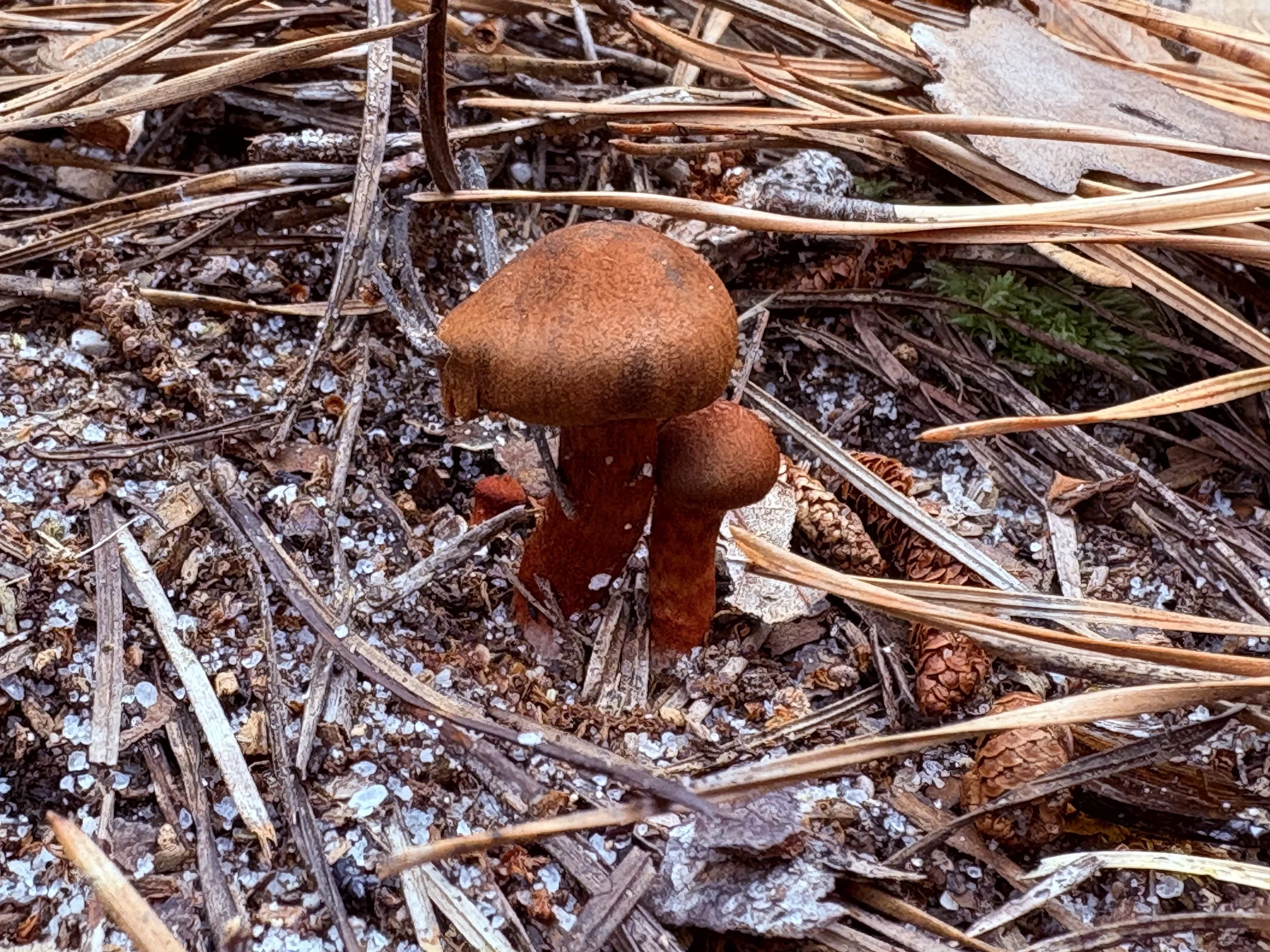
Each woodland offered different discoveries. Each species presented its own possibilities.
And every walk held the promise of something unexpected.
From Forest Floor to Fiber
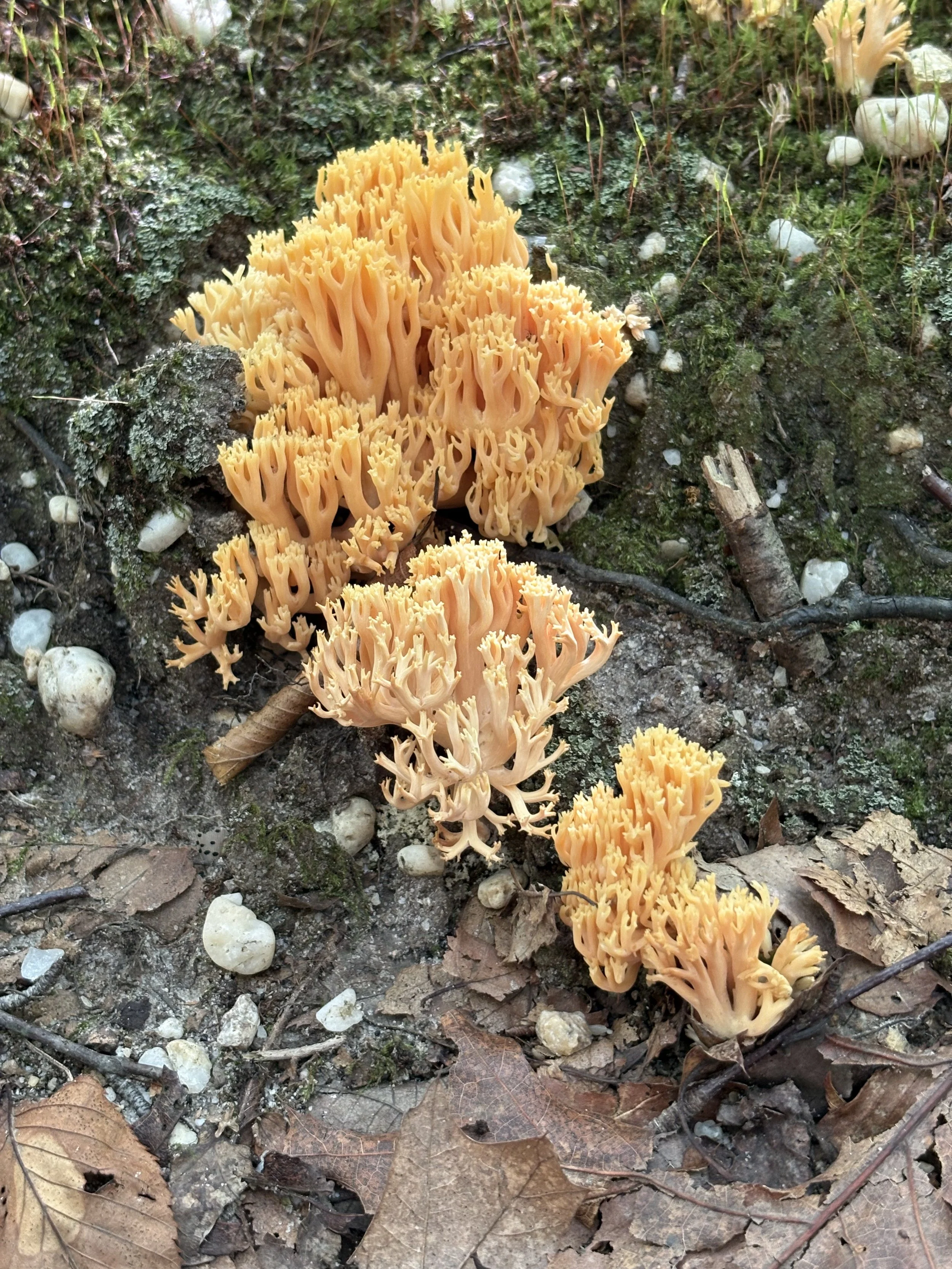
Finding the mushrooms was only the beginning.
Creating these colors was a process that unfolded over many weeks and months, beginning with the first discoveries in the summer and continuing well into autumn.
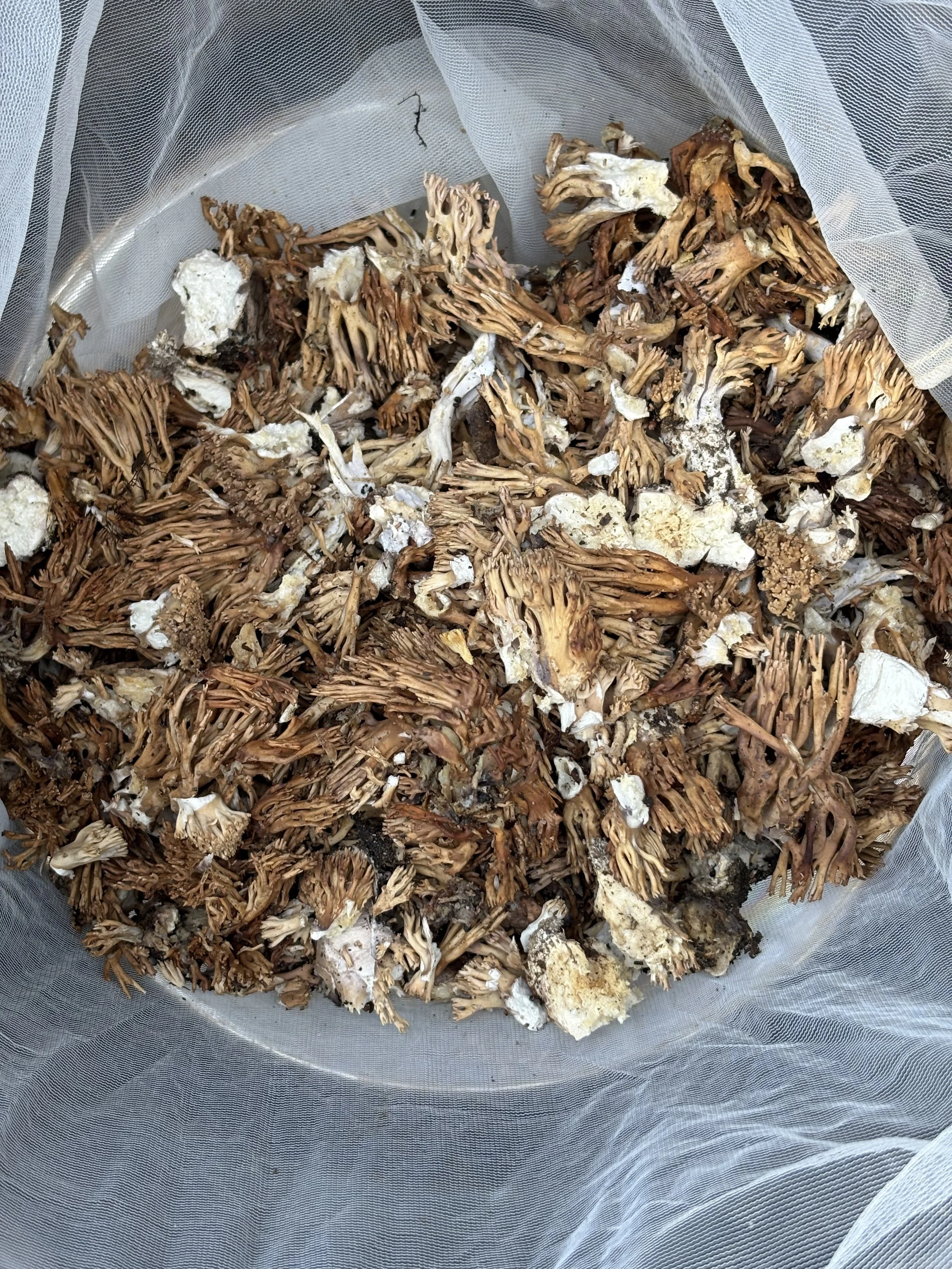
Every successful foraging trip brought new possibilities—and plenty of work.
Mushrooms were carefully identified, sorted, and prepared for future dye sessions. Some were dried and preserved, while others went straight into the freezer, which quickly became so full of dye mushrooms that finding room for actual food was becoming a challenge!
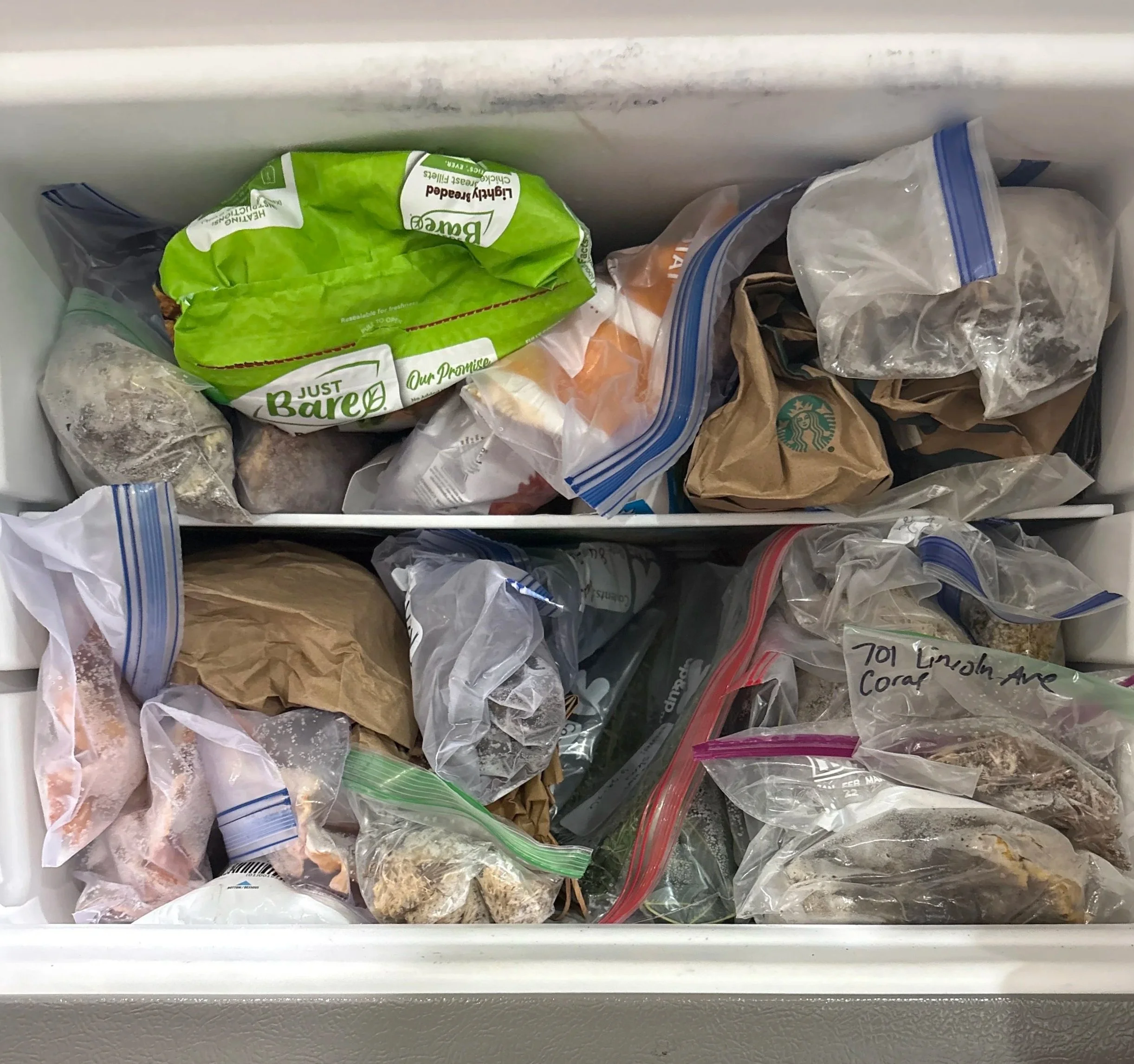
As the season progressed, my collection of dye materials grew alongside my anticipation of the colors they might reveal.
Then came the experiments.
Different mushroom species require different approaches to extracting their pigments. Water chemistry, temperature, mordants, and pH can all influence the colors that eventually emerge.
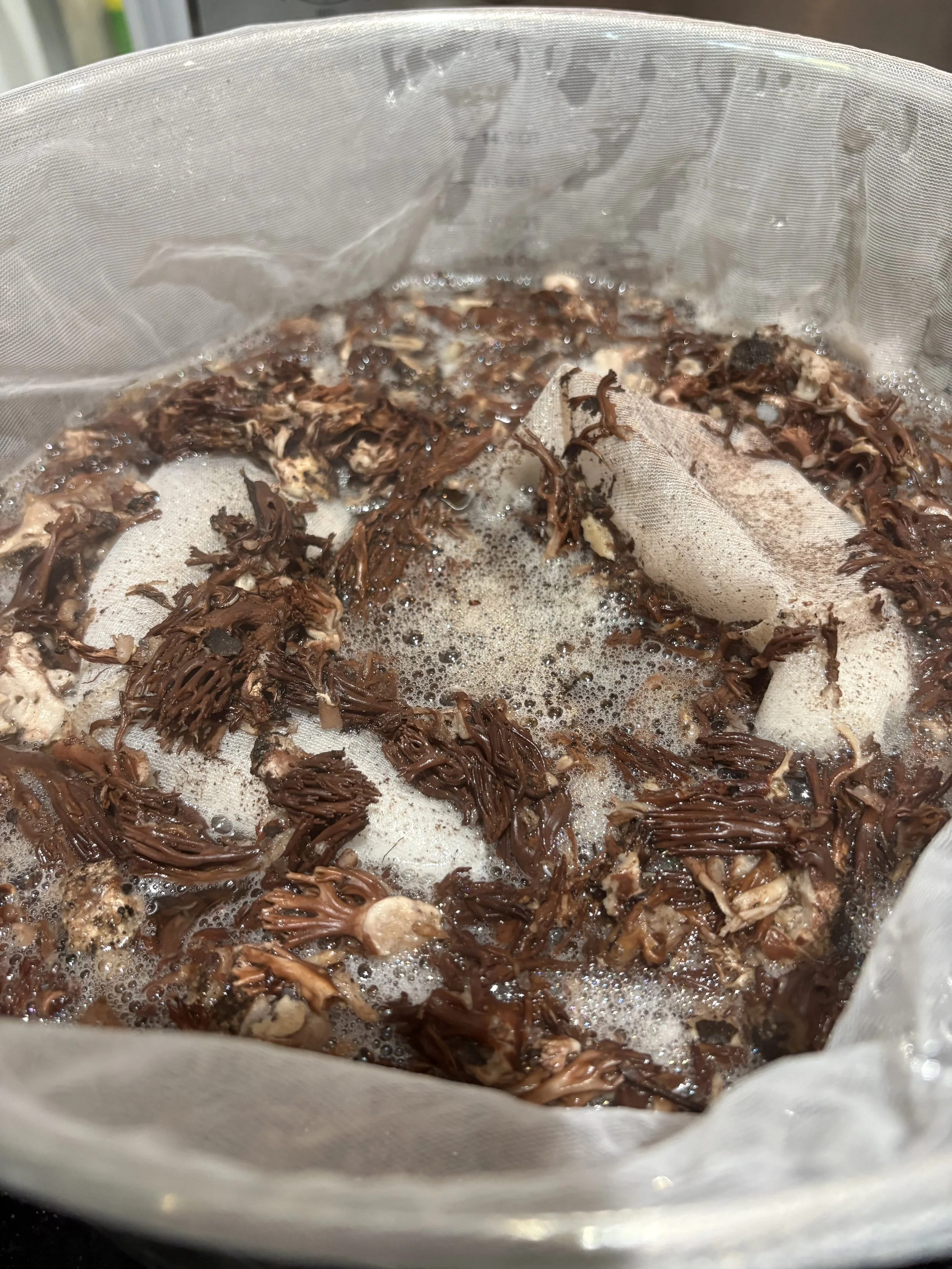
Even successive dye baths using the same mushrooms can produce dramatically different results.
Some experiments yielded exactly the colors I’d hoped for. Others surprised me, sending me in new directions.
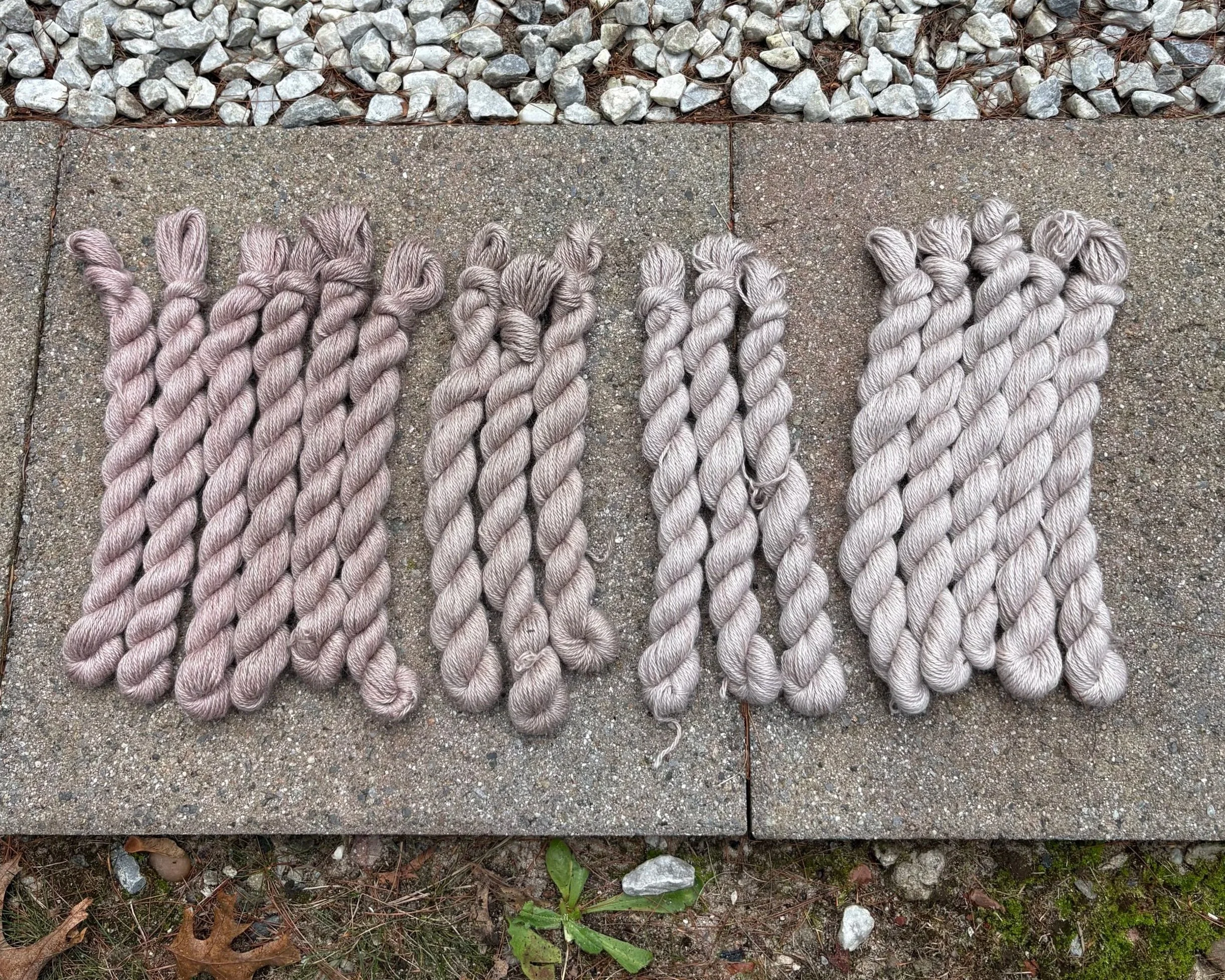
And then came the exciting part: bringing all those individual colors together.
After months of foraging, experimenting, and dyeing, I finally laid out the many mini skeins I’d created throughout the season to see how they might work together.
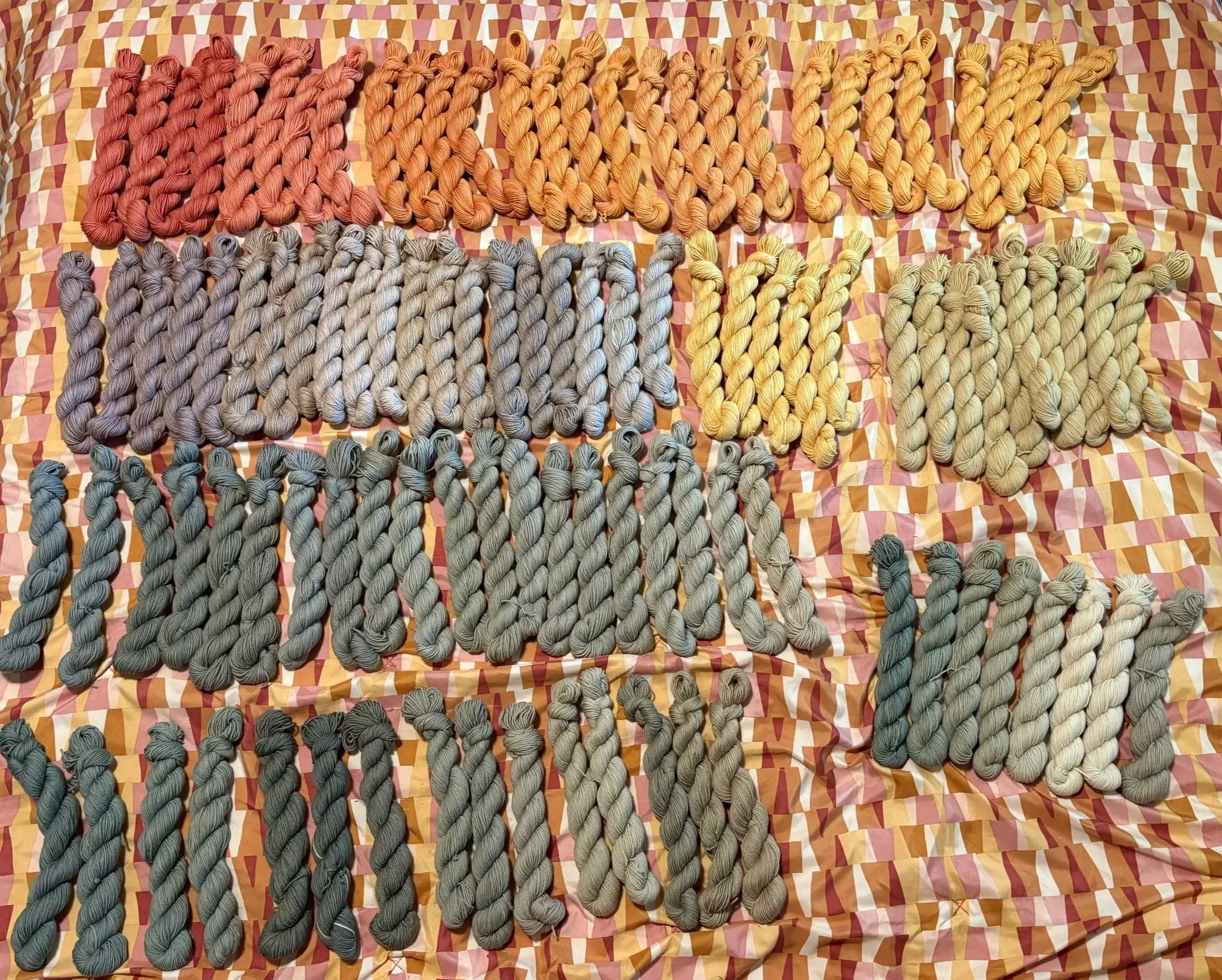
What emerged was an extraordinary spectrum of colors, each one drawn from mushrooms gathered in Long Island’s woodlands. I began arranging them into gradients and complementary combinations, allowing the colors themselves to guide the creation of each palette.
What started as individual dyeing experiments had become something much larger: a collection that tells the story of an extraordinary mushroom season.
Months in the making—and years in the waiting.